This is a good place to stop focusing on the term Search Engine Optimization and to start talking about Internet Marketing. Search Engine Optimization is only one aspect of effectively selling your product or service on the Internet. Your success hinges on the cooperation of people from many disciplines. One of the primary reasons efforts to improve Internet sales fail is a lack of cooperation from management — deciding what they want to tell the customer rather than concentrating on answering the customer’s question or solving the customer’s problem. And if you’re lucky enough to have a potential customer visit your website, you have only a few seconds to earn their interest, or the customer clicks away.
While all pages are important, search engines place the most importance on the home page. The home page is valuable real estate, and every discipline in the company competes for this tiny space. It’s even harder because most people will not scroll until they become interested — so you have the space above the fold (what you can see the moment you land on the page) to work with.
No matter how honed a consultant’s people skills may be, there is a high probability that an honest Internet marketing consultant will upset somebody. That’s why success stories are few and far between. To understand the problem, let’s begin by stepping on everybody’s toes.
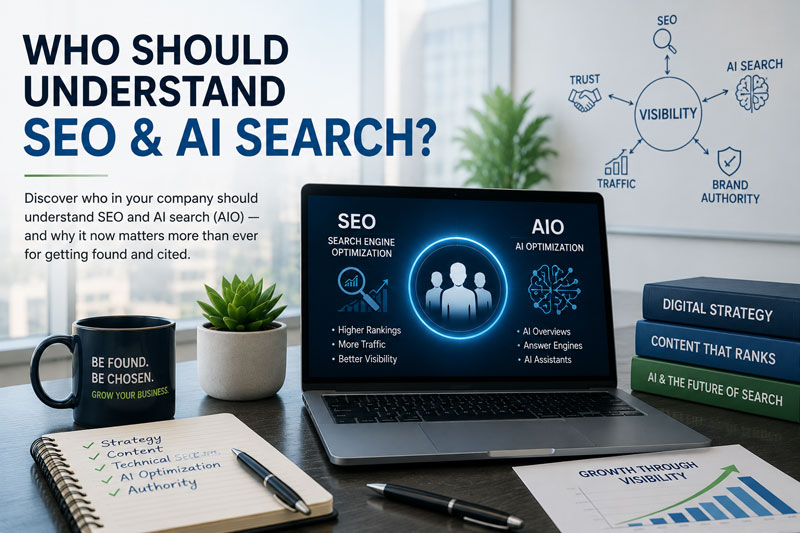
Everything on this page just got more important, because your customers no longer only search Google — they ask AI. When someone asks ChatGPT, Google’s AI Overviews, or another AI assistant to recommend a business like yours, the AI writes an answer and cites a handful of sources. If your business isn’t one of them, you’re invisible in that conversation — even if you rank #1 in the traditional results below it.
Here’s the good news for every stakeholder on this page: AI rewards the same thing Google always has — clear, useful, well-organized content written for people. The owner who wants to lead with company history, the marketer who wants print-style jargon, the designer who wants pizazz over speed — every instinct that hurt you in traditional search hurts you in AI answers too. Getting cited by AI isn’t a separate gimmick to buy; it’s what good SEO has always been.
What earning AI citations actually takes:
- Direct answers. Pages structured so a clear, complete answer appears in the first sentence or two of each section — because that’s what AI systems extract and quote.
- Semantic markup (Schema.org). Structured data that tells AI systems exactly who you are, what you do, and where you serve.
- Verifiable specifics. Concrete, checkable facts — years in business, service area, real reviews — over marketing fluff.
- Consistency across the web. Business information that matches everywhere it appears, because AI systems cross-check sources before citing them.
And a caution everyone should share: AI is a tool, not a replacement. AI-generated filler is detectable, often subtly wrong, and penalized by both Google and your customers. A human who understands the business still has to own every published word.
Most web designers have had little or no experience with the principles of Internet Marketing. Schools teaching website design spend little or no time on writing effective web copy or Search Engine Optimization. Most designers pride themselves on creating unique and entertaining designs. Depending on the subject, such presentations can be necessary. Many times, though, the entertainment factor obscures the rapid communication of the message and slows the response time of the page, particularly in a mobile environment. Search engines and most serious visitors shun excessive pizazz in favor of pages that simply present information that answers their questions or solves their problems.
Web designers pour their hearts and souls into their websites and protect them the way a mother bear protects her cub. No outsider is going to tell them that things have to change — and the resistance can be incredible.
Usually, the bigger the company, the bigger the people problems — the bigger the egos, and the harder it is to institute new ideas.
It is often impossible to get people in large organizations to pull together and succeed. Knowing that fact, however, can be a major strategic opportunity for smaller, entrepreneurial companies.

 Now Everyone Needs to Understand AI Search (AIO), Too